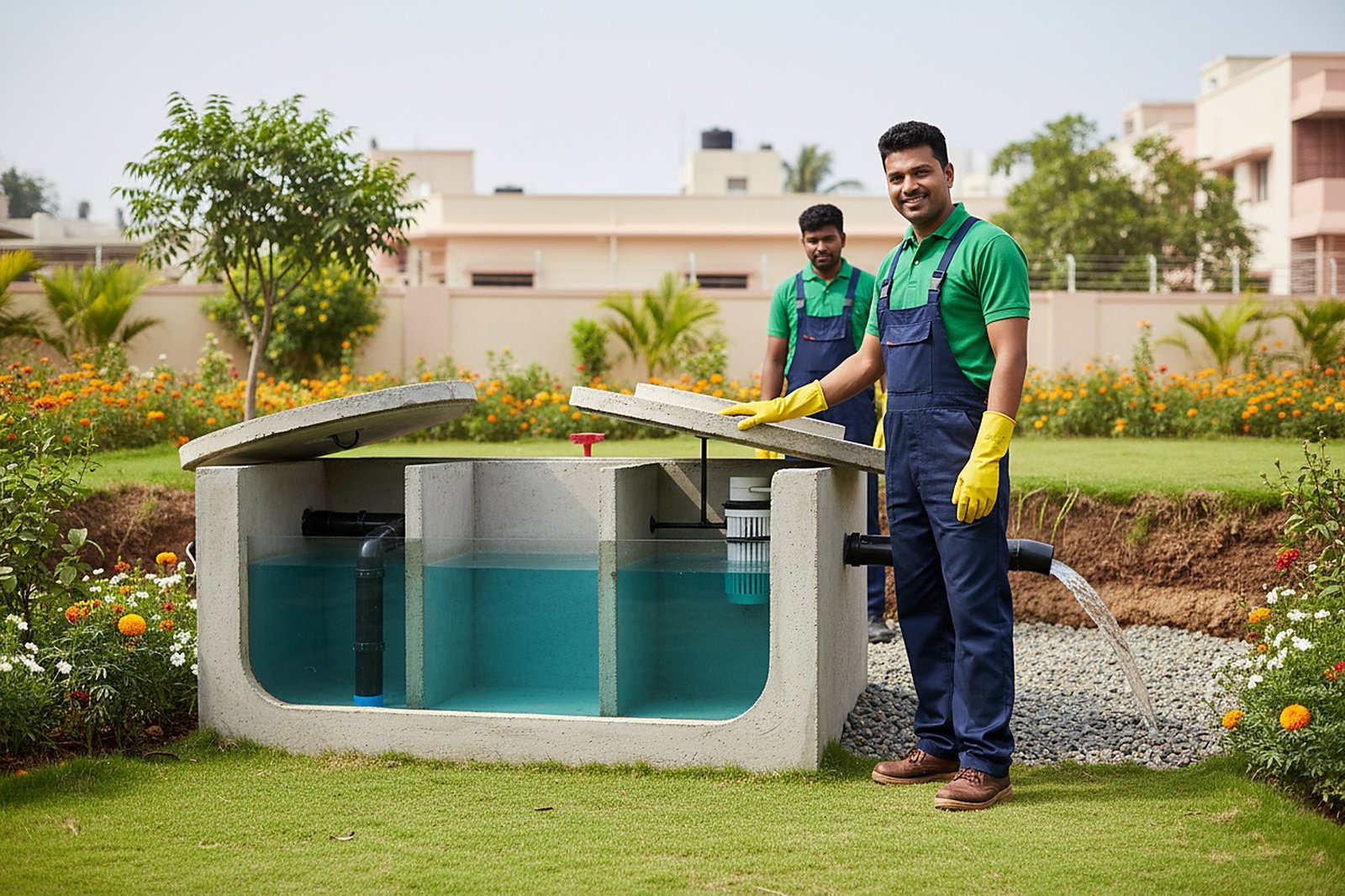
Looking After a Soak Pit A soak pit does the quiet half of the work: it takes the liquid leaving the septic tank and lets it disperse into the ground. When it stops absorbing, the tank behind it fills far faster than it should - so a tank that suddenly needs emptying twice as often is often a soak pit problem rather than a tank problem.
How a Soak Pit Fails: Fine silt and solids gradually seal the sides and base, and once the surrounding soil can no longer take water the pit stays full. Nothing breaks; it simply stops working.
The Signs Worth Watching: Waterlogging or a soft patch above the pit, drainage that slows across the whole property, odour outdoors, and a septic tank filling faster than its usual interval.
Keep Solids Out of It: The single most useful thing. A septic tank that is emptied on time keeps solids where they belong and stops them reaching the pit, which is what shortens a pit's life more than anything else.

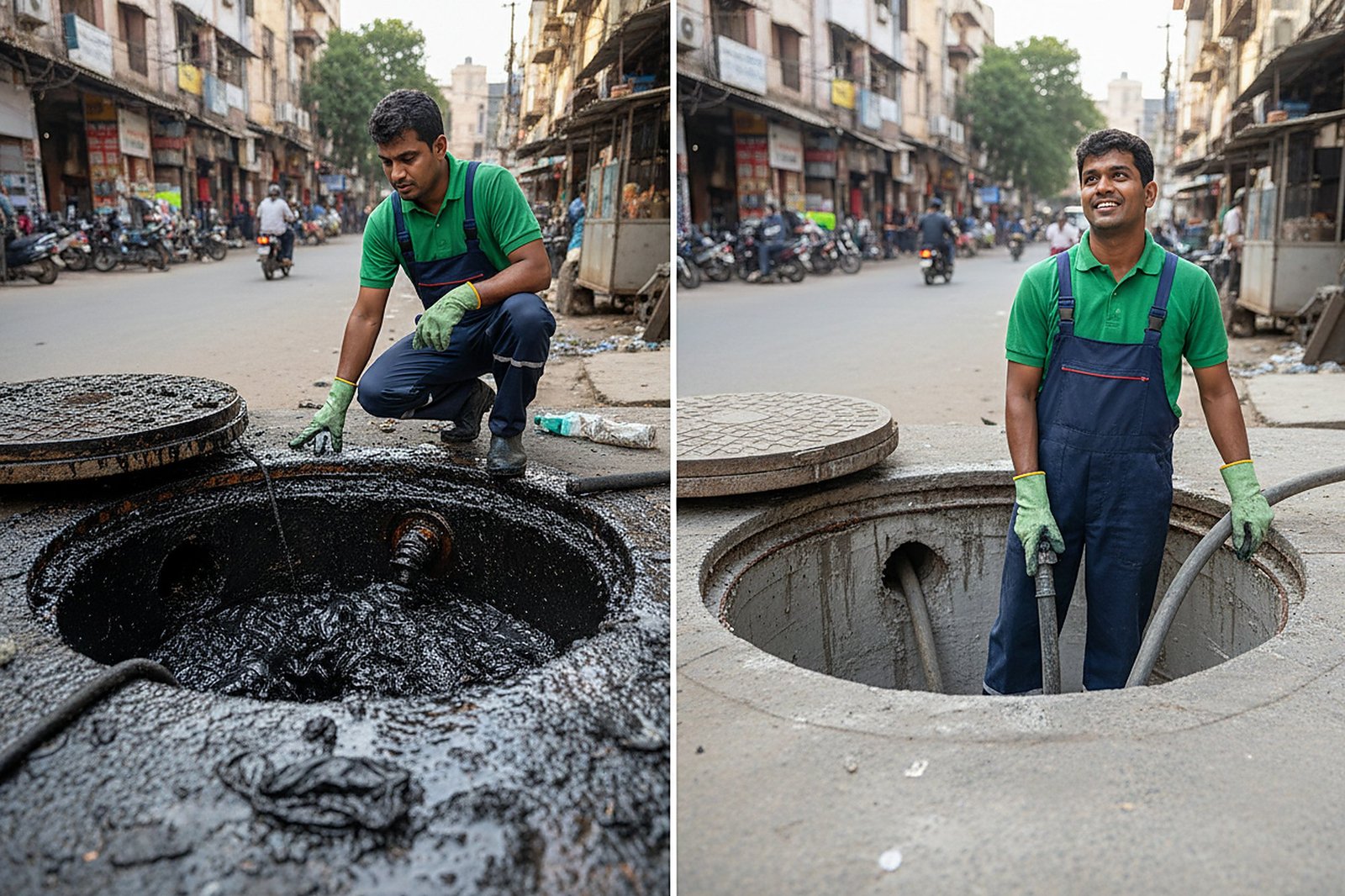
Watch What the Pit Receives: Grease, silt-laden washing water and construction debris all seal a pit quickly. Directing rainwater into it is another common mistake - it floods the pit exactly when the ground is least able to absorb.
Cleaning a Pit That Has Silted: The accumulated silt and sludge are removed and the sides cleaned so the pit can absorb again. Whether that restores it depends on how long it has been struggling and what the surrounding soil is like.
When a Pit Needs Rebuilding: If a pit silts up again quickly after cleaning, the ground around it is saturated or the pit is undersized for the property, and cleaning it repeatedly is money spent on the wrong thing.
Before It Becomes a Problem A soak pit checked while the septic tank is being emptied costs nothing extra and is the easiest time to see how it is coping. If you need soak pit cleaning in Hyderabad, tell us how old the pit is and whether you are seeing waterlogging, and we will advise whether it needs cleaning or a closer look at the ground around it.