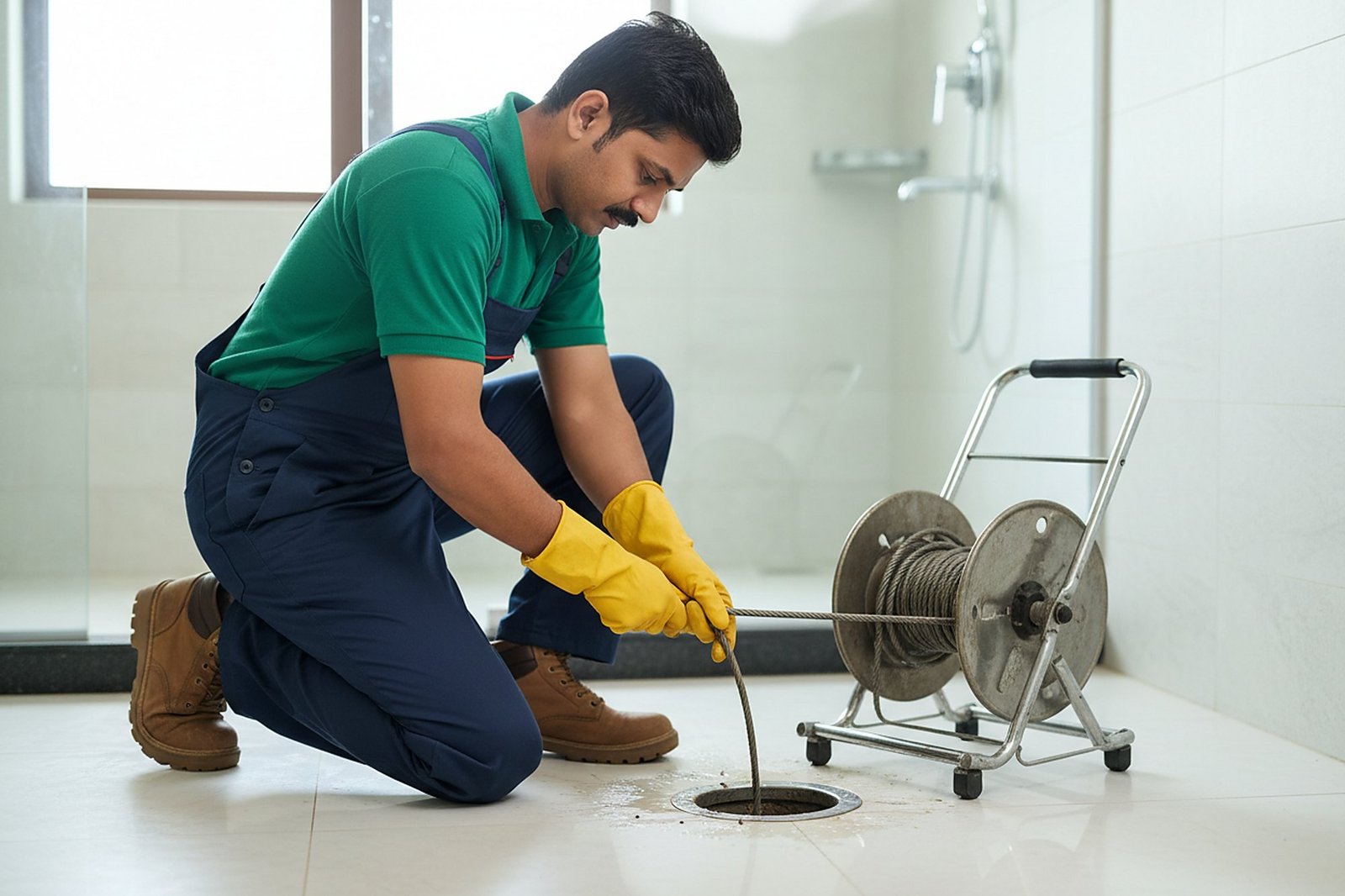
What High-Pressure Jetting Does Jetting cleans a drain with water alone. A hose carrying a specialised nozzle is fed into the line, and jets directed backwards both drive the hose forward and scour the pipe wall on the way. There is nothing left in the pipe afterwards and no chemical in the ground.
It Cleans the Whole Pipe, Not a Channel Through It: Rodding can punch an opening through a soft blockage and leave the deposit around it. Jetting takes the pipe back to its full bore, which is why the interval before the next problem is so much longer.
It Suits Grease and Silt Particularly Well: Cooled grease on a pipe wall and silt settled in a low point are exactly what a jet removes. Both are the usual cause of a kitchen or yard drain that has slowed over months rather than blocked overnight.
No Chemicals Involved: Water and pressure do the work, so nothing corrosive goes into the drainage system or the ground around it. That matters on a property with a soak pit or a borewell nearby.
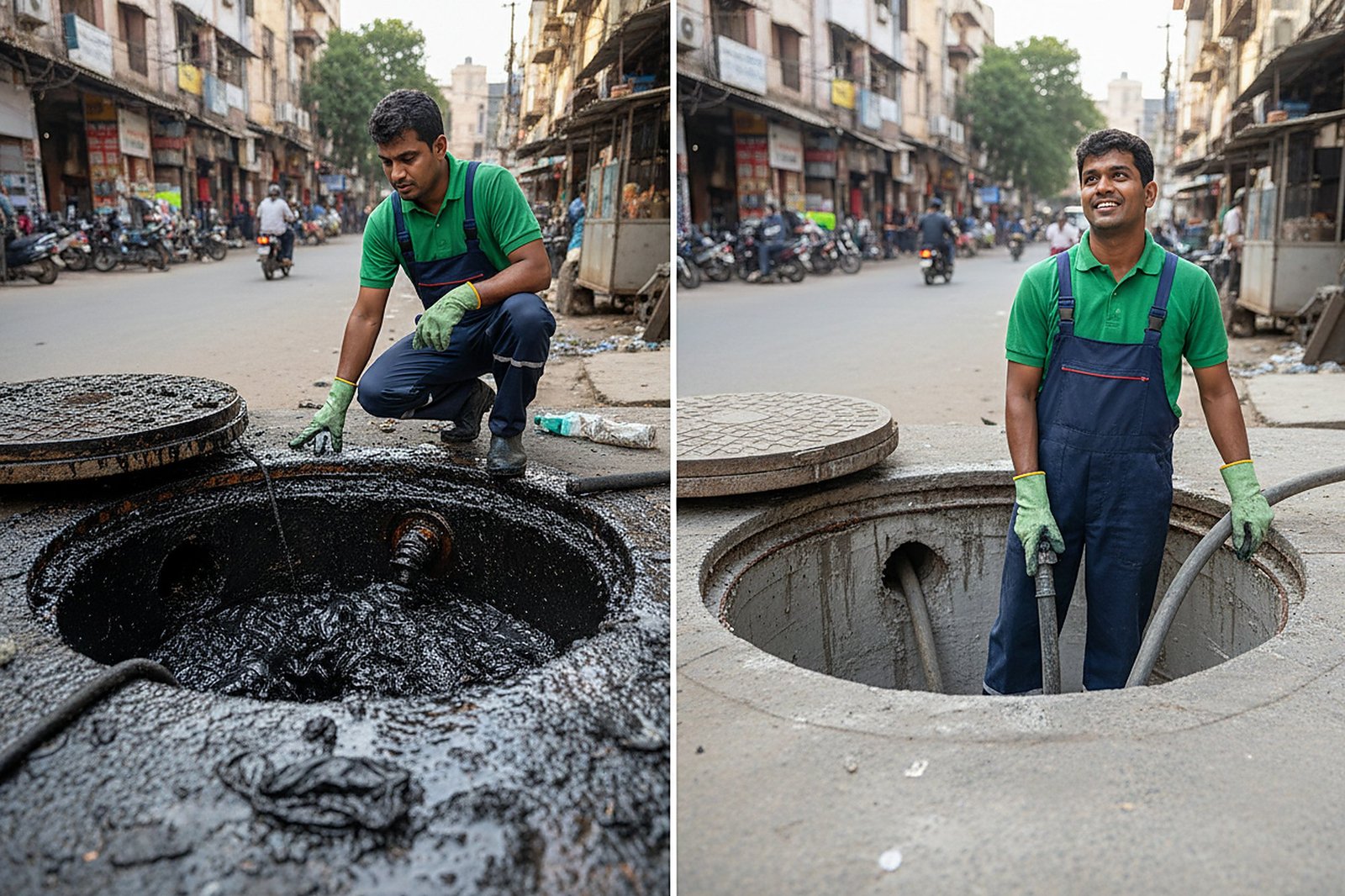
It Reaches Where Access Is Poor: The hose follows the pipe, so a run under a floor or a compound can be cleaned from the nearest chamber without opening up the ground to get at it.
Pressure Has to Match the Pipe: An old clay run with tired joints does not want the pressure a concrete sewer will take. Judging that is the part that needs experience, and getting it wrong can turn a dirty pipe into a broken one.
It Shows You the Real Condition: Once the deposit is gone a camera can actually see the pipe. Cracks, displaced joints and root ingress are all far easier to find in a clean line than a dirty one.
Is Jetting Right for Your Drain? It is the right answer for build-up and the wrong one for a collapsed pipe, which needs repair rather than cleaning. If you are considering drain jetting in Hyderabad, describe what the drain is doing and how old the property is, and we will advise whether jetting, unblocking or a camera survey should come first.